
The 'Slow Travel' Trend
Why Women Are Ditching the Itinerary This Spring
Spring is finally here and this year, the most exciting thing women are doing on vacation is… absolutely nothing on a schedule.
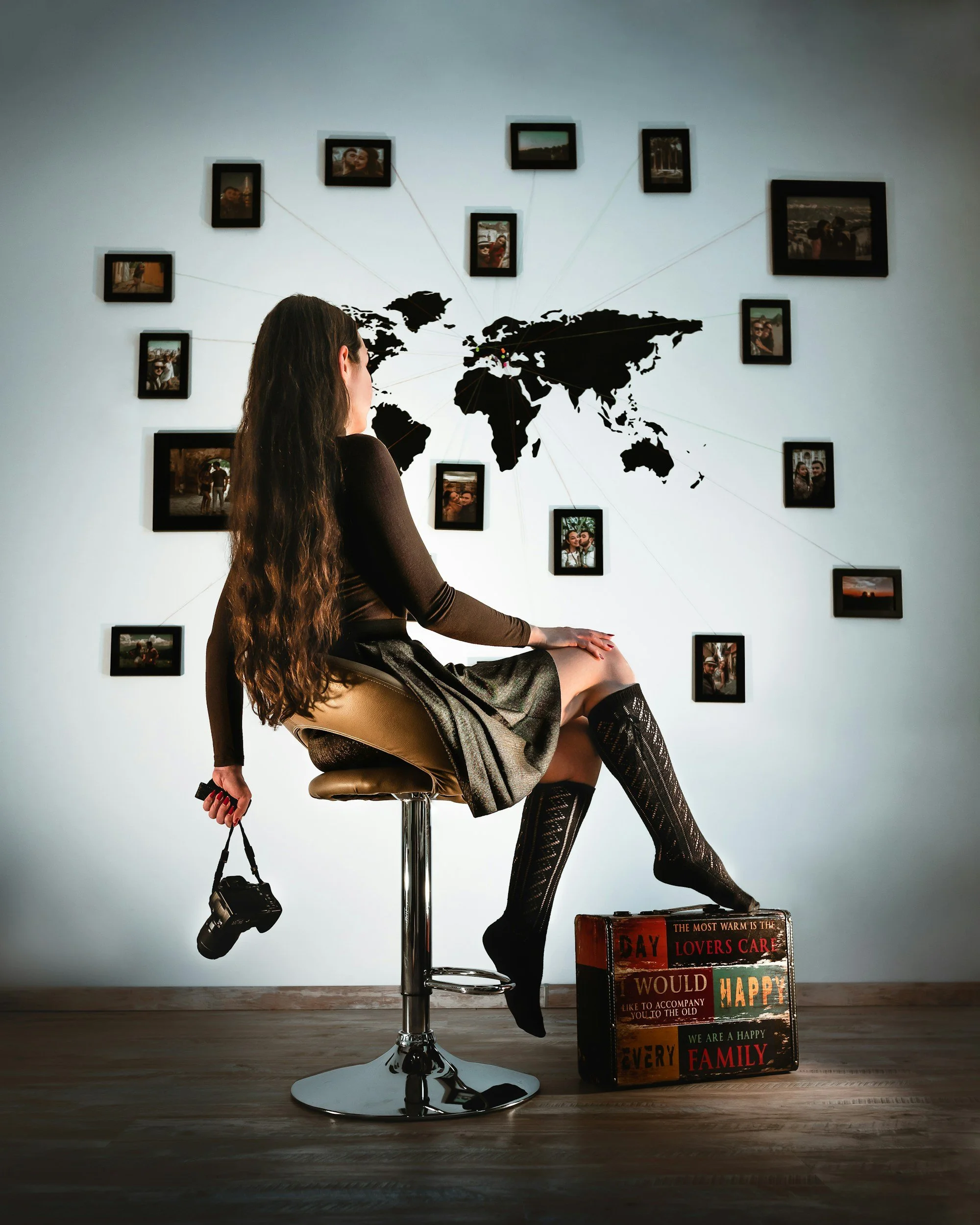
The Rush Is Over. The Era of "Feel More, See Less" Has Begun.
For years, travel was a checklist. Five cities in seven days. Instagram-worthy viewpoints. The pressure to "see it all." But something has shifted in a big, beautiful way.
Travelers are quietly rewriting the rules, leaning into intentional travel and choosing experiences meant to nourish the spirit rather than simply fill an itinerary. Instead of chasing the perfect social media moment, the desire to "see it all" is fading, replaced by a longing to feel something again.
Welcome to the slow travel movement — and this spring, women are leading it.
So, What Exactly Is Slow Travel?
Slow travel is the practice of spending more time in fewer places. Instead of cramming five cities into seven days, travelers are opting for week-long stays in a single destination. This deeper approach allows for more authentic connections with local culture, reduced travel fatigue, and a smaller carbon footprint — think renting an apartment in Lisbon for two weeks instead of hopping between three countries.
It's also being called "soft travel." Soft travel mainly focuses on ease, comfort, and connection over exploration and busy itineraries and it's taking the travel world by storm.
Why Women Are Driving This Trend
This isn't just a vibe shift — there's real data behind it.
Studies show that women are more likely than men to experience burnout, with 46% of female professionals reporting extreme stress levels compared to 37% of men, according to the Deloitte Women at Work Report. It makes sense then, that women are increasingly using travel as a true reset — not another item to conquer.
Women now make up 71% of solo travelers, and more are choosing to invest in themselves, recognizing that prioritizing well-being is not selfish.
Travel expert Sarah Murdoch of Adventures with Sarah has seen this first-hand. In 2026, the trend has shifted from "checklist tourism" to slow travel. Women are moving away from rapid city-to-city touring, instead choosing second-city swaps (like the Dolomites over Rome), seeking out "hushpitality" accommodations that prioritize silence and personal space, and using travel as a time to paint, write, or learn a new skill.
The Numbers Don't Lie
The travel industry is responding to this shift because the demand is undeniable.
The Explore WorldWide Travel Report found that bookings for trips of more than 8 days have grown 19 percent since last year, showing a clear appetite for longer, slower travel experiences.
Almost 60% of Gen Z and Millennial travelers took at least two holidays of five nights or more in 2025 and intend to increase travel budgets again for 2026, with a strong focus on wellness and meaningful experiences rather than rapid sightseeing.
And it's not just about length, it's about what fills the time. 91% of travelers say they're interested in taking a trip centered around reading, relaxation and quality time, according to Expedia's travel trends report. Mentions of reading-related terms in Vrbo guest reviews have surged 285% year-over-year, and searches for "book retreats" and "book club retreat ideas" are up on Pinterest.
What Does Slow Travel Actually Look Like in Spring 2026?
Farm Stays Are Having a Major Moment
Farm-stay vacations are seeing a boom, with 84% of travelers saying they're interested in staying on or near a farm, according to a recent report from Expedia, Hotels.com and Vrbo. Interest in rural escapes has boomed for Gen Z travelers over the past two years, with a 300% spike year-over-year in guest reviews mentioning farms on Vrbo.
Train Travel = The New Luxury
Many slow travelers are choosing to reach destinations like Brussels, Geneva, or Milan by train, destinations reachable in just a few hours. The hours spent aboard a railcar become a decompression chamber: you read, dream, observe — time finally returns to its natural course.
Wellness Is the Backbone, Not the Bonus
According to the International Luxury Travel Market, more than 90% of luxury travelers now actively look for wellness programs when booking a trip — a statistic that reflects a broader cultural recalibration around health, longevity, and emotional well-being.
Under-the-Radar Destinations Are Having a Glow-Up
In 2026, Portugal is a top choice for slow travel. Solo women are flocking to the Azores for volcanic peace and to the Alentejo region for wine and cork forests. And it's not just Europe — vacationers are increasingly seeking slower, more enriching trips away from the busyness of big-city destinations, with hidden gem cities gaining massive traction on social media.
It's a Mental Health Movement
Many are calling 2026 the year of the "whycation" — a travel mindset that starts not with a pin on a map, but in pursuit of a feeling. People aren't asking where should I go next? They're asking what do I need right now? To reconnect. To restore. To learn something new. To feel something different.
As one wellness travel CEO puts it: "Women often put travel on the back burner as they lack confidence to do so solo and they also can struggle with a work-life balance, with their own self-care often falling to the bottom of a never-ending to-do list. Yet a travel experience can be a hugely transformative experience, and build confidence that they can take into other areas of life."
How to Embrace Slow Travel This Spring
Your Starter Guide
You don't need a six-week sabbatical to tap into this movement. Here's how to start:
Choose depth over breadth. Pick one destination and actually stay there. Explore the neighborhood coffee shop. Take a cooking class. Return to the same park bench three days in a row.
Ditch the must-see list. Leave at least two days completely unplanned and let your mood guide you.
Book a stay with a kitchen. An Airbnb, a cottage, or a farm stay means you can cook, linger, and live , not just visit.
Travel by train where possible. The journey becomes part of the experience.
Set a soft social media boundary. You don't have to document everything. Some moments are just for you.
Slow travel isn't a passing fad — it's a response to a growing need. It invites us to redefine our own notion of luxury. What if wealth were measured in moments savored rather than miles traveled?
This spring, the most powerful thing you can do is slow down. Your nervous system will thank you. And honestly? So will your travel memories.